
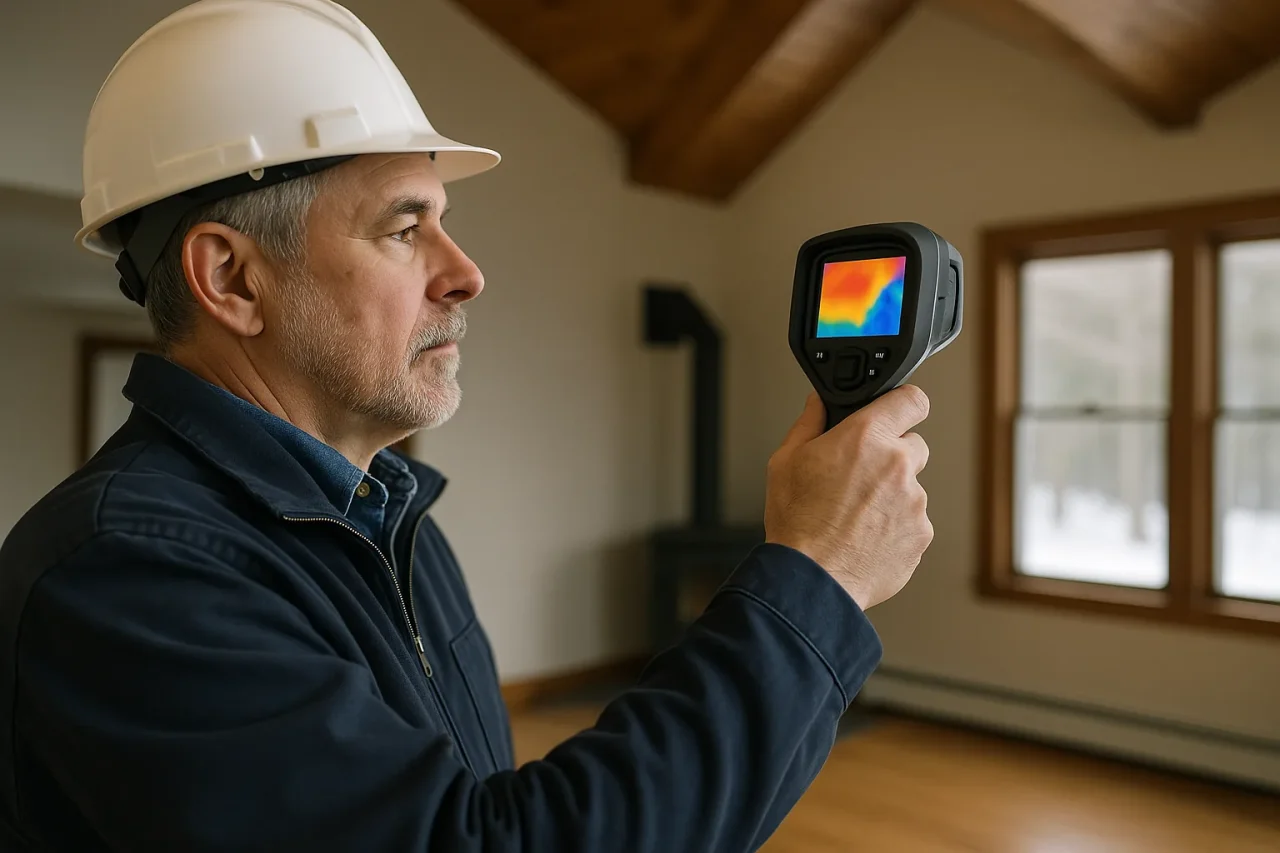
Thermal Imaging Inspection in Massachusetts Infrared scanning surfaces issues invisible to the naked eye — water intrusion, missing insulation, electrical hot spots, and HVAC performance problems.
Thermal imaging is one of the most effective inspection tools available — and one of the most underused in standard inspections. A calibrated infrared camera reveals problems that are completely invisible to the eye: hidden water leaks, missing insulation, overheated electrical connections, HVAC distribution issues, and air leakage at every penetration in the building envelope.
Thermal imaging is included on most inspections — and standalone thermal scans are available for owners diagnosing ongoing comfort, energy, or moisture issues.
What Thermal Imaging Finds
Hidden moisture
Wet drywall, leaking pipes inside walls, roof leaks, foundation seepage, and shower-pan failures all show up as cool spots on thermal because evaporation cools the surface. This is the #1 use case for thermal in home inspections.
Missing insulation
A wall cavity with no insulation behaves dramatically differently than its neighbors. In winter, missing-insulation areas show cold; in summer, hot. The boundaries of the defect are visible on infrared with a clarity that no other tool provides — often revealing entire wall sections, ceiling areas, or room headers that were missed during construction.
Electrical hot spots
Overloaded breakers, loose connections, undersized wiring, and failing components run hotter than they should. A thermal scan of the panel and major junction points catches these before they become safety issues.
HVAC performance
Uneven supply-register temperatures point to duct leakage, blocked returns, or distribution imbalances. Cold supply lines into otherwise warm ductwork mean cooling is working but it’s not getting where it needs to.
Air leakage and ice-dam risk
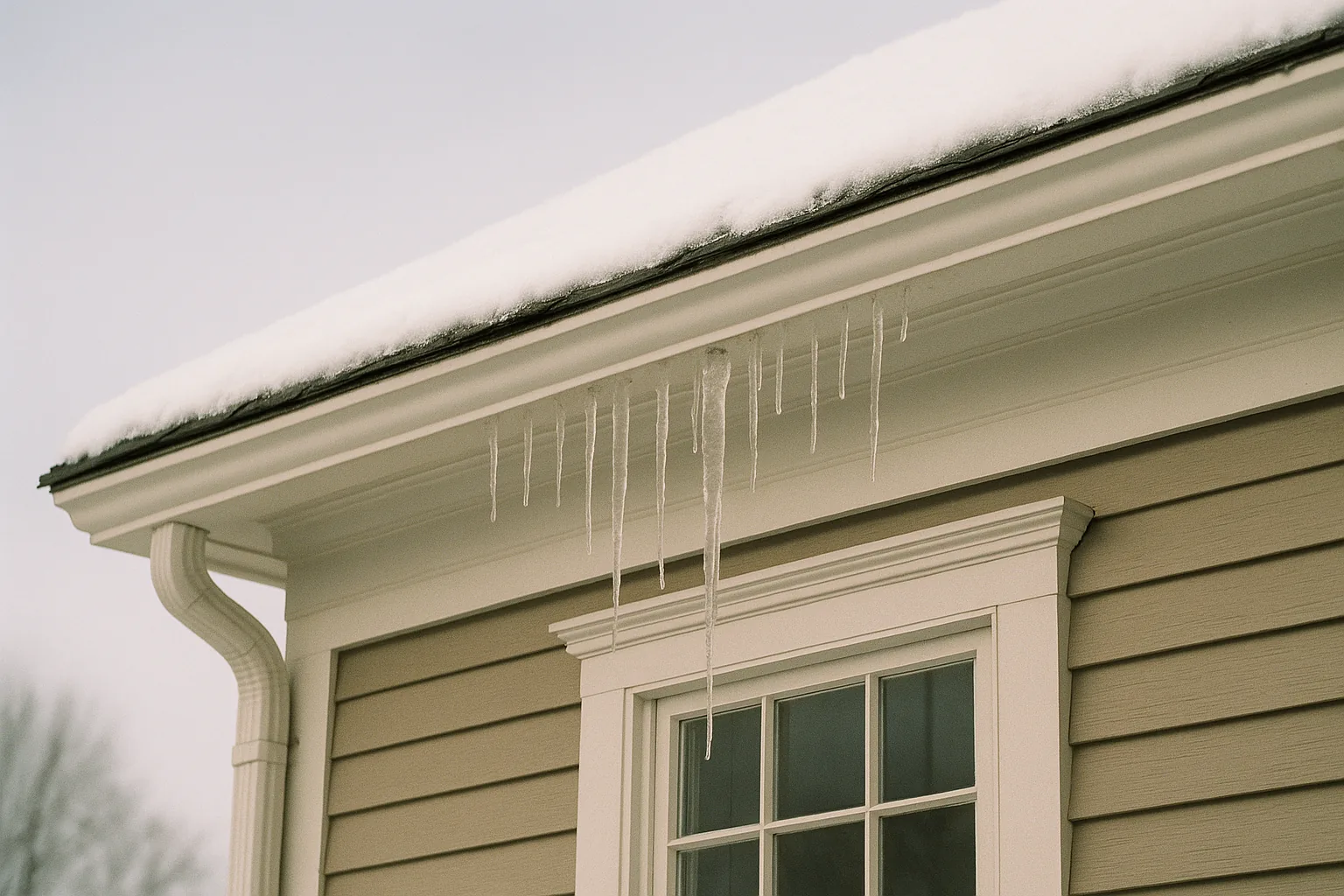
At penetrations — recessed lights, plumbing chases, top plates, attic hatches — infrared reveals the air-leak paths that drive ice damming in winter and energy loss year-round.
When Thermal Imaging Helps Most
- Buyer inspections in winter — heating-season temperature differentials make every defect more visible
- New construction — particularly pre-drywall — to catch missing insulation before it’s hidden forever
- Pre-listing inspections — find issues a buyer’s inspector with thermal will find anyway, on your own timeline
- Investigating active issues — known water stain, ongoing comfort complaint, intermittent breaker trip, ice damming history
- Older homes with mixed insulation history — finding the cold rooms before they become the cold seasons
Equipment
A calibrated FLIR-class professional thermal camera with documented annual calibration. Images are temperature-mapped, date-stamped, and embedded directly in the inspection report alongside standard photos.
Schedule
Most thermal scans are added to a buyer home inspection, new construction inspection, or pre-listing inspection. Standalone visits are available for owners diagnosing specific issues. Schedule online.
More Specialty Tests All Bundleable into One Visit
Radon Testing
48-hour continuous-monitor radon testing in the Pioneer Valley. Add to any home inspection or schedule standalone.
Learn MoreWell Water Testing
Comprehensive pre-purchase well water testing for rural Pioneer Valley properties. Lab analysis through state-certified labs, results in 5–10 business days.
Bundle with home inspection — package pricing
Learn MoreSeptic System Inspection
Pre-purchase septic system evaluation for rural Pioneer Valley properties. Coordinated with Massachusetts Title 5 inspectors when transfer requires it.
Learn MoreTermite & WDI Inspection
NPMA-33 wood-destroying insect inspection — required for most VA, FHA, and many investor loans. Carpenter ant, carpenter bee, and powderpost beetle evaluation included.
Learn MoreMold Inspection
Visual mold evaluation with moisture-source identification, optional air sampling. Common in older Pioneer Valley basements and mill-conversion units.
Learn MoreBundle This Test into a Complete Inspection
Specialty testing is most valuable when paired with a full visual inspection. Choose the right inspection type, then add this test to the same appointment.
Buyer Home Inspection
A thorough, independent inspection of every major system before you close.
Learn MoreNew Construction Inspection
Pre-drywall, final-walk, and 11-month warranty inspections for new builds.
Learn MorePre-Listing Inspection
See what the buyer's inspector will find — before they do.
Learn MoreFrequently Asked Questions About This Test
Schedule Thermal Imaging Inspection Bundle With Any Home Inspection
Thermal imaging inspection is available across the Pioneer Valley — standalone or bundled into the same visit as a home inspection. MA License #587.
Licensed Home Inspector MA #587 · 35 Keets Rd, Deerfield, MA 01342 · Serving Franklin County, Hampshire County & the Pioneer Valley