
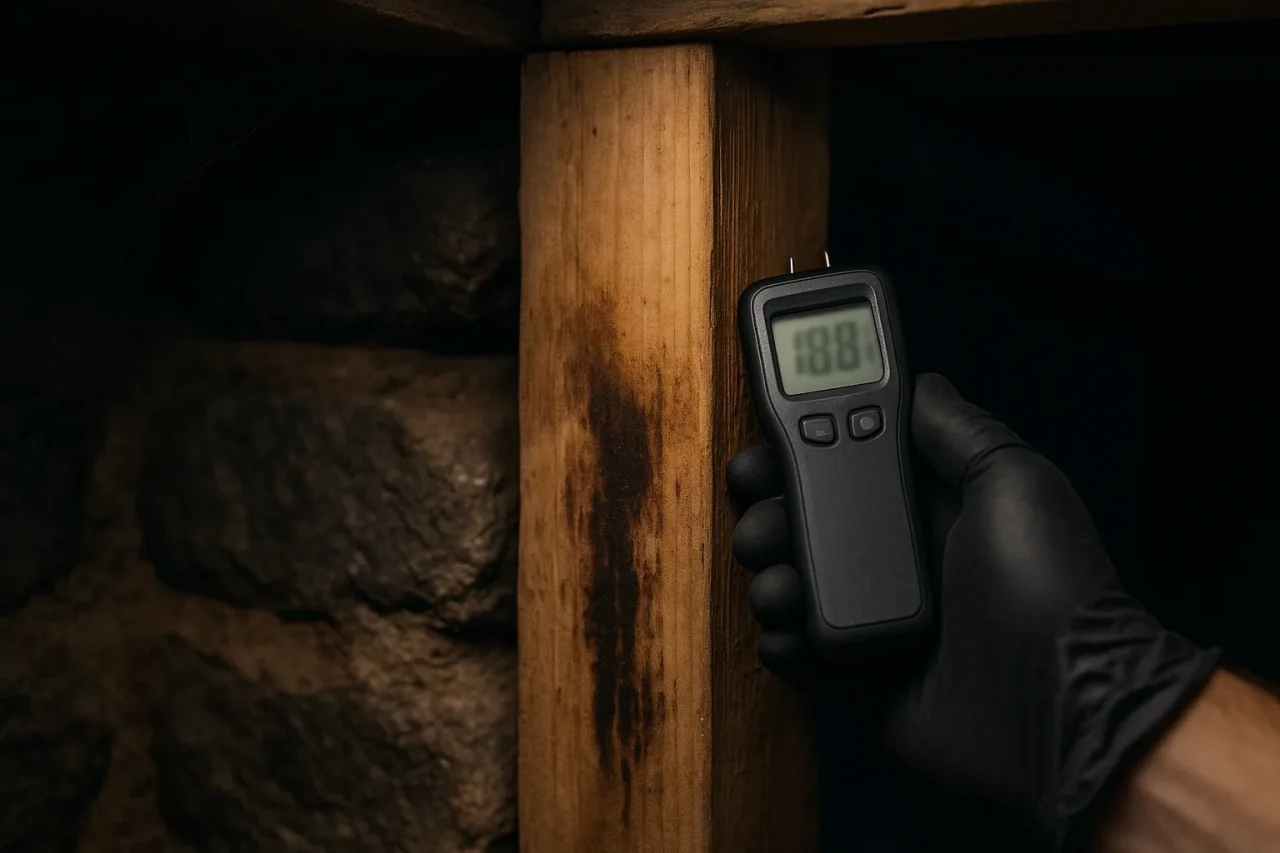
Mold Inspection in Massachusetts Visual mold evaluation with moisture-source identification, optional air sampling. Common in older Pioneer Valley basements and mill-conversion units.
Mold inspection isn’t part of a standard home inspection — but for many Pioneer Valley properties, it’s worth doing. Older basements, fieldstone foundations, mill-conversion condos, and humid crawlspaces all create environments where mold thrives.
The approach is moisture-first: identify visible growth, then find the water that’s feeding it. The water source is what actually needs to be solved. Mold visible on surfaces is the symptom; the moisture pathway is the disease.
What’s Inspected
- Visual evaluation of all accessible interior surfaces — walls, ceilings, floors, basements, crawlspaces, attics — for visible growth or staining
- Moisture mapping with a calibrated moisture meter on suspect materials
- HVAC system review for visible growth on coils, plenums, ductwork, and supply registers
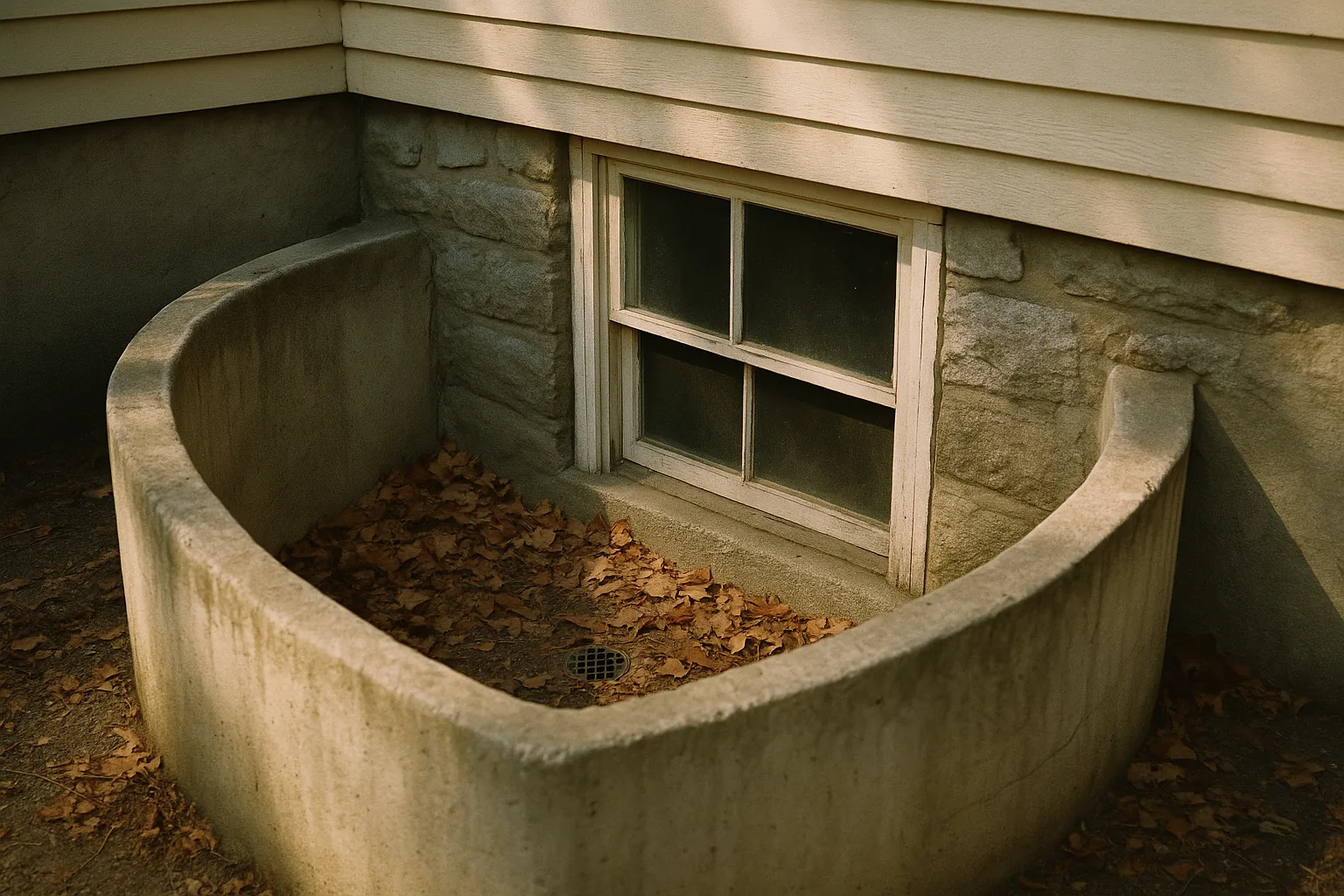
- Source identification — locating roof leaks, plumbing leaks, foundation seepage, inadequate ventilation, condensation issues, or grading problems that are creating the moisture
- Photo documentation of all findings
- Optional air sampling — interior + exterior baseline plus targeted samples at suspect areas; sent to an AIHA-accredited laboratory
What’s in the Report
- Visible findings, photographed and located on a property sketch
- Moisture readings at each suspect area
- Identified or suspected moisture source(s)
- Recommendations: monitor, remediate at small scale, professional remediation, or source-of-water repair before any remediation
- Lab results (if air sampling was included), with plain-English interpretation
Pioneer Valley Patterns
- Fieldstone-foundation basements — surface mold on stone, joists, and stored cardboard/textiles. Almost universal; addressed with dehumidification and source control.
- Older mill-conversion condos — moisture migration through retrofitted exterior walls, particularly on north-facing units.
- Crawlspaces with vented designs — moisture from ground combined with seasonal humid-air infiltration. Conditioned crawlspace conversion is increasingly the standard fix.
- Attics with insufficient ventilation — moisture from kitchen/bath fans not vented to exterior, ice damming, or missing soffit ventilation.
- Basement-level condo units — accumulation of basement humidity in finished space.
Schedule
Schedule online. Most mold inspections are added to a buyer home inspection when the home tour or disclosure surfaces a moisture history.
More Specialty Tests All Bundleable into One Visit
Radon Testing
48-hour continuous-monitor radon testing in the Pioneer Valley. Add to any home inspection or schedule standalone.
Learn MoreWell Water Testing
Comprehensive pre-purchase well water testing for rural Pioneer Valley properties. Lab analysis through state-certified labs, results in 5–10 business days.
Bundle with home inspection — package pricing
Learn MoreSeptic System Inspection
Pre-purchase septic system evaluation for rural Pioneer Valley properties. Coordinated with Massachusetts Title 5 inspectors when transfer requires it.
Learn MoreTermite & WDI Inspection
NPMA-33 wood-destroying insect inspection — required for most VA, FHA, and many investor loans. Carpenter ant, carpenter bee, and powderpost beetle evaluation included.
Learn MoreThermal Imaging Inspection
Infrared scanning surfaces issues invisible to the naked eye — water intrusion, missing insulation, electrical hot spots, and HVAC performance problems.
Learn MoreBundle This Test into a Complete Inspection
Specialty testing is most valuable when paired with a full visual inspection. Choose the right inspection type, then add this test to the same appointment.
Frequently Asked Questions About This Test
Schedule Mold Inspection Bundle With Any Home Inspection
Mold inspection is available across the Pioneer Valley — standalone or bundled into the same visit as a home inspection. MA License #587.
Licensed Home Inspector MA #587 · 35 Keets Rd, Deerfield, MA 01342 · Serving Franklin County, Hampshire County & the Pioneer Valley