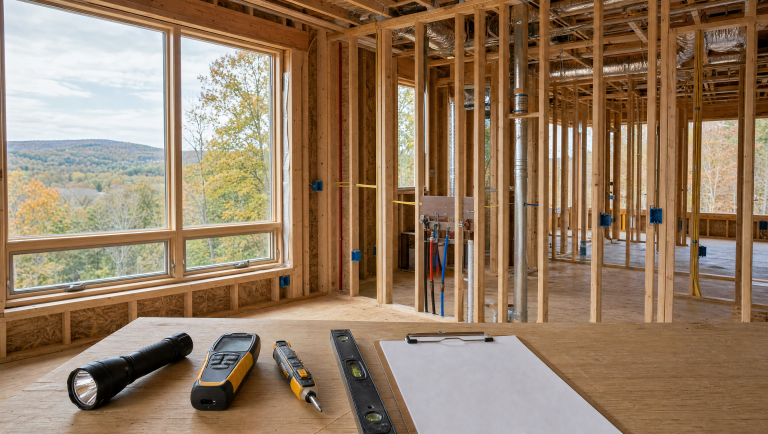
A townhouse inspection checklist starts with the ownership form: an attached townhouse is not necessarily a condominium. First ask your transaction attorney to confirm what you are buying and which documents govern it. Then separate three questions: what condition is visible, what may extend into shared areas, and who is responsible for repair. This guide is for a buyer of an individual attached home, not an entire multi-family building.
A licensed home inspector can evaluate readily accessible, exposed components within the agreed scope. Ownership boundaries, maintenance duties, and any association's financial position or rules require document review and the appropriate professional advice—not a visual inspection. Apply the condominium-specific checklist below only if that is the property's ownership structure.
Townhouse inspection checklist at a glance
Start with a three-column review. The inspection identifies observed conditions; the relevant documents and transaction team help establish responsibility and financial context.
| Area | What the inspection can help evaluate | What to confirm separately |
|---|---|---|
| Inside the home | Visible plumbing, electrical, heating or cooling, windows, doors, finishes, and accessible structural components | Owner maintenance duties, prior leaks, and any applicable alteration approvals or restrictions |
| Exterior and roof | Visible siding, trim, drainage, grading, roof surfaces, penetrations, and connections to the home when accessible and included | Ownership, access, and maintenance terms; for a condominium, unit, common, or limited-common classifications |
| Shared systems | Accessible conditions within the agreed scope, such as shared walls, common basements, garages, utility rooms, or drainage paths | Access arrangements, service history, planned projects, and responsibility for shared equipment |
| Documents | Not a physical inspection function | Condominium records if applicable; otherwise ask counsel which deeds, easements, or shared-maintenance agreements need review |
Inspect the unit as a complete living system
Even if an association or another party maintains part of the building, the buyer still needs a clear picture of the home's current condition. Arrange access to every included space and avoid blocking panels, appliances, attic hatches, or mechanical equipment.
Interior and moisture
- Point out staining, damaged finishes, musty odors, soft materials, or other signs that merit closer evaluation.
- Ask about visible supply and drain connections at kitchens, bathrooms, laundry areas, and mechanical equipment.
- Have the inspector check representative windows and doors and note difficult operation, damaged trim, or gaps within the agreed scope.
- Identify where an observed condition may continue beyond the home—for example, a ceiling stain below another unit or a damp foundation wall beside shared grading.
Electrical, heating, cooling, and safety
- Confirm that the inspector can reach the electrical panel and visible equipment.
- Ask which heating, cooling, hot-water, or ventilation components serve only the home and which are shared.
- Note equipment age information when visible, but treat age as context rather than proof of remaining service life.
- Record recommended repairs, monitoring items, and specialist evaluations separately so priorities remain clear.
Ken Arnold Home Inspection's condo and townhouse inspection service describes unit inspection and accessible common-element review. Confirm the property's ownership form and the specific areas to be included when arranging your inspection.
Trace exterior conditions back to the unit
Attached homes make boundaries important. A gutter, roof plane, deck, retaining wall, utility penetration, or drainage swale can be physically close to one home without its location establishing who owns or maintains it. The visual inspection should document accessible conditions; it should not be used to guess the legal boundary.
Where access is allowed and the area is included, pay attention to:
- roof edges, flashing, penetrations, and transitions between attached sections;
- gutters and downspouts, including where runoff travels after discharge;
- siding, trim, decks, balconies, stairs, railings, and entry roofs;
- grading, foundation exposure, window wells, and signs of water entry;
- shared garages, basements, attics, utility rooms, and visible separation walls, ceilings, and doors.
Observing visible separation surfaces is not determining their fire-safety ratings or certifying code compliance. Fire-suppression-system evaluation is also outside the required standard home-inspection scope. These limits are set out in the Massachusetts inspection standards; arrange any specialist review separately.
If an area will be locked or excluded, learn that before inspection day. An unavailable roof hatch or mechanical room can leave a meaningful information gap when the buyer needs to make a decision.
Review the documents that define responsibility
If the townhouse is a condominium: Massachusetts real-estate guidance explains that ownership combines a unit with an interest in common areas. The master deed identifies units and common areas, including limited-common elements where applicable—shared property reserved for use by a particular unit or group of units. Governance documents address maintenance, expenses, and rules. Review the state's condominium, cooperative, and timeshare guidance, then have your transaction attorney interpret the property's documents and amendments. A common or limited-common designation alone is not an answer to who must pay for a particular repair.
Ask your attorney and the association to help request and organize the applicable records:
- the master deed, declaration, bylaws, rules, and amendments;
- the current operating budget and available reserve information;
- recent meeting records and notices of planned capital work;
- current fees, special assessments, and available insurance or claim information;
- maintenance history for shared roofs, siding, paving, drainage, and major equipment;
- records for alterations to the unit when approvals may have been required.
If the townhouse is fee-simple rather than a condominium: do not assume the condominium records above exist. Ask counsel to review the deed and any applicable party-wall, easement, association, or shared-maintenance documents for ownership, access, and repair questions. The task is still to connect each observed condition to the right document and responsible party.
The useful question is not simply “Is the roof good?” It is: “What condition was visible, what remains unknown, what work is documented or planned, and which party is responsible?”
Know what a Massachusetts home inspection does not decide
The Massachusetts consumer fact sheet describes a standard home inspection as a visual examination of the readily accessible, exposed portions of a residential building's structure and major systems. It also states that an inspection is not an appraisal, building-code inspection, or guarantee against future problems. See the official Home Inspectors Consumer Fact Sheet and the current 266 CMR 6.00 Standards of Practice for the governing scope.
The inspection report can document an active stain, damaged flashing, or an observed unsafe electrical condition. It does not determine title boundaries, interpret contracts, predict every future failure, or decide whether an association's reserves are financially adequate. Those are separate questions for the attorney, association, insurer, lender, or other qualified adviser.
Turn the report into a decision list
- Group by urgency. Separate immediate safety concerns from repairs, specialist follow-up, maintenance, and monitoring.
- Add a responsibility column. Name the party confirmed by the relevant documents and advice, or mark the item “not yet confirmed.” Do not assume based only on location.
- Resolve access limitations. Decide whether an inaccessible shared area, shut-down system, or missing document warrants more information before a deadline.
- Compare condition with records. For example, if a condominium inspection identifies roof leakage and meeting records mention a future roof project, confirm the project's scope, timing, and funding rather than assuming it resolves the leak.
- Keep the source attached. Link each decision to the inspection report page, document section, seller response, or professional opinion that supports it.
A sample report can show how observations, implications, and recommendations are organized before you hire an inspector. Review Ken Arnold Home Inspection's sample reports to see the reporting format.
Prepare before inspection day
Confirm the address, parking instructions, utility readiness, occupancy, pets, and agreed access to the attic, basement, garage, exterior, roof-view locations, and shared mechanical spaces. Have the responsible property contact arrange safe access and operating systems; the inspector does not energize shut-down supplies or equipment. Send the inspector the areas you have permission to access; send legal and financial documents to the professionals responsible for reviewing them.
The result should be one coordinated decision file: observed condition from the inspection, responsibility from the governing documents and advice, cost or scope information from qualified contractors when needed, and transaction advice from the buyer's attorney or agent.
Buying an attached home in Western Massachusetts? Confirm the ownership form, arrange the appropriate inspection scope early enough to preserve access and review time, and bring the report and relevant property documents together before your decision deadline.